Repiping
Repiping
When patching one more pinhole stops making sense
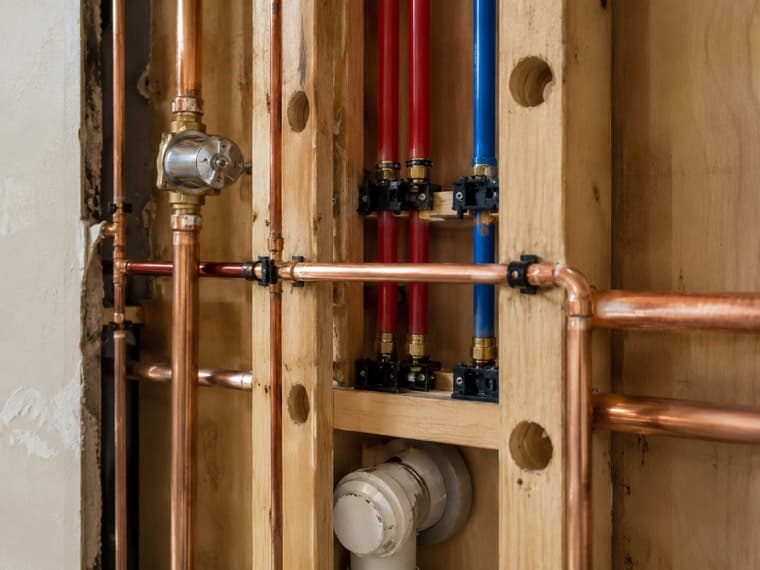
Two things drive nearly every repipe in this county. 1970s copper that has started pinholing, and the 1980s-90s polybutylene still in a lot of Fairfax County houses. Both fail in a pattern rather than at one spot, which is why the third repair in a year is usually the moment to stop patching.
What it costs
What it costs
One fixed price covering pipe, fittings, permits, county inspection and the drywall repair. We paint to match only when you ask, because most people would rather do that themselves or already have the colour.
Local knowledge
The two pipe problems this county actually has
Copper laid in the 1970s can start pinholing once the interior wall thins, and the giveaway is that the leaks arrive in a run. One in the ceiling in March, another eight feet along in July. Repairing each one is cheaper each time and more expensive overall.
Polybutylene is the grey or blue-grey plastic pipe used heavily here between the late 1970s and the mid 1990s. It fails at the fittings and it fails without warning, which is why it is the one material we will tell you to replace before it leaks rather than after. If you are not sure what you have, send us a photo of the pipe coming into the water heater and we will tell you.
How the job actually runs
Two to four days for most houses
Water is off during working hours and back on every night. You stay in the house.
Access cuts, not demolition
We open what we need, keep the cuts in straight lines, and patch them before we leave. Nothing is left open for a second trade.
Pressure tested and inspected
The system is pressure tested and the county signs it off. You get the permit paperwork with the invoice.
Questions
Repiping questions
It is grey or blue-grey flexible plastic, usually stamped PB2110, and it is easiest to spot where it enters the water heater or at the main shutoff. Send us a photo and you will have an answer the same day.
Yes for copper, where a bad run can be replaced on its own. For polybutylene we recommend doing all of it, because leaving half in place leaves the same risk in the walls you did not open.
No. Water is off while we work and on every evening. Most people carry on as normal apart from the noise.
Not once you have approved it. If we open a wall and find something genuinely different, we stop and show you before anything else happens, which is a conversation rather than a change on the invoice.
Find out what you have in the walls
A photo of the pipe at your water heater is usually enough for us to tell you what you are dealing with.
VA Class A #XXXX-XXXXXXX. Licensed and insured, with a 2-year warranty on parts and workmanship.