Water heaters · 4 min read
Why is my water heater leaking?
Where the water is coming from tells you whether this is a $189 repair or a tank that needs replacing this week. Four places to check, in the order a plumber checks them.
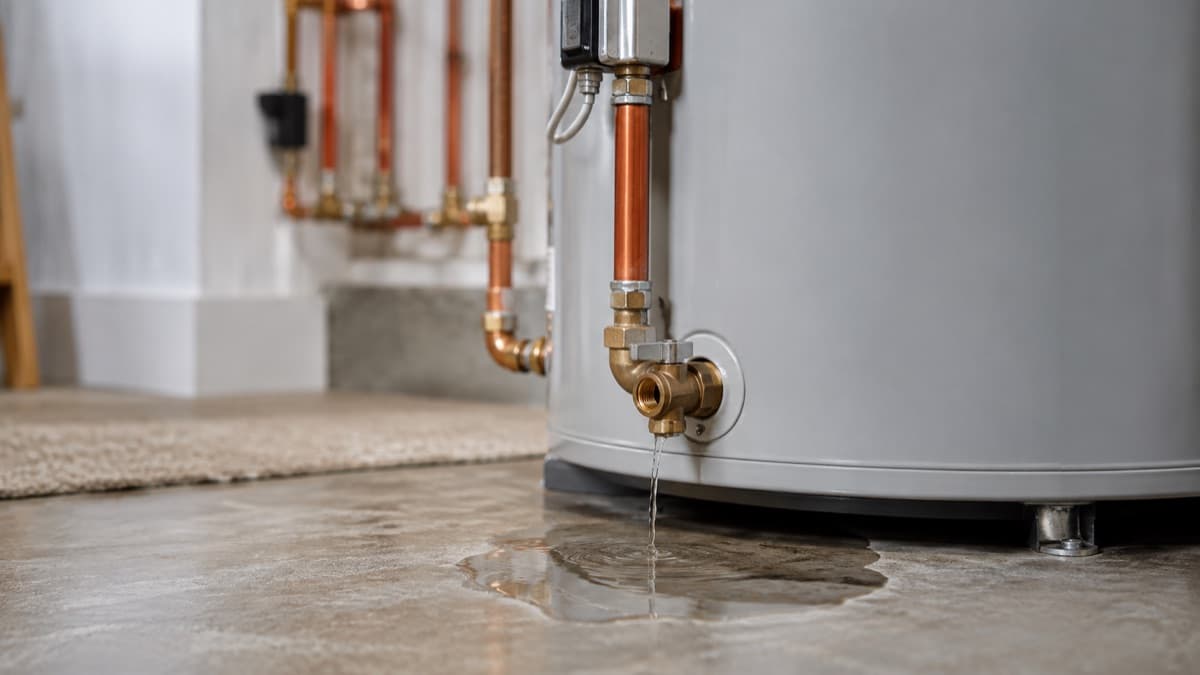
Almost every call that starts with water on the floor gets answered the same way: where exactly is it coming from. Not how old the tank is, not what brand it is. The location decides whether this is a part worth changing or a tank at the end of its life, and you can usually work it out yourself in about five minutes.
Start by drying everything and waiting
Water travels. A drip from a fitting at the top runs down the side of the tank and pools at the bottom, which is exactly where a failed tank would also leave it. Dry the tank and the floor completely, put a sheet of newspaper underneath, and give it an hour.
Where the water shows up next is the answer. If nothing comes back, you may have had condensation on a cold morning, which is normal on a tank in an unheated space and is not a fault.
The four places to check, in order
The connections on top. Two flexible lines come into the tank, and the nut on either one can weep. This is the cheapest thing that goes wrong and it is a repair.
The temperature and pressure relief valve, usually on the top or upper side with a pipe running down toward the floor. If it is dripping, the valve may be faulty, but far more often the pressure coming into the house is too high and the valve is doing its job. Fix the pressure, not just the valve.
The drain valve at the bottom, the one that looks like a hose bib. These seep after they have been opened for a flush and often just need replacing.
The tank body itself. If water is coming through the steel rather than from any fitting, that is the end of it.
The one that cannot be repaired
A tank leaking from the body has corroded through from the inside. There is no patch, weld or sealant that fixes it, whatever you read online, because the glass lining has failed and the steel behind it is going. The hole only gets bigger.
If that is what you have, move whatever is on the floor around it today and plan on a replacement this week rather than this month.
What it usually costs
A fitting, a relief valve or a drain valve is a repair, and repairs start at $189. A tank replacement starts at $1,685 and includes hauling the old one away, a new expansion tank and new connectors.
If yours is over twelve years old and leaking from a fitting, we will tell you that too. Fixing a $200 part on a tank with a year left in it is not a favour to anybody.
Send us a photo of where the water is showing and the label on the side, and you will usually get a straight answer over the phone before anyone comes out.